
OpenSea: Comprehensive NFT Marketplace and Token Trading Platform
NFT MarketplacesDescription
OpenSea, exchange everything — token trading and NFT marketplace. Welcome to the best place to discover, trade, and create onchain.
A Closer Look
OpenSea sits within the NFT marketplace category, a part of the broader digital-asset ecosystem focused on discovering, trading, and creating blockchain-based collectibles and tokens. These marketplaces matter because they bring listings, collection information, creator activity, and market signals into one browsing environment. They can also make a fast-moving market easier to explore, although visitors still need to verify an asset’s details, network, ownership history, and current market conditions before trading.
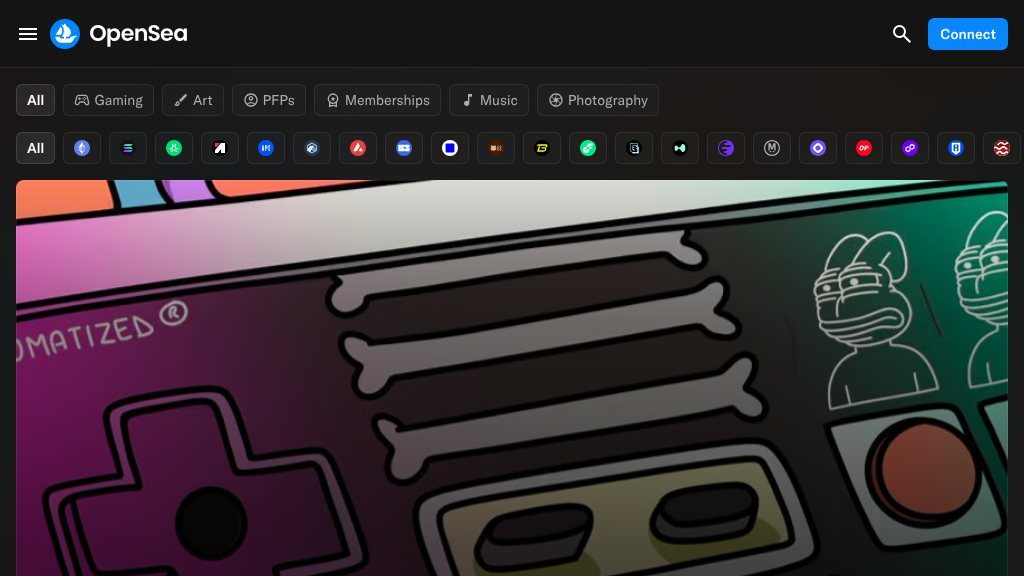
The site presents itself as a place to “exchange everything,” with dedicated areas for NFTs and tokens. Its visible marketplace includes categories such as gaming, art, profile-picture projects, memberships, music, and photography.
Core Offering
The main experience combines discovery with marketplace data. Visitors can browse featured collections, live and upcoming drops, trending collections, and tokens with recent momentum. Collection pages display details such as floor price, item count, total volume, and the percentage of items listed. These signals can help users compare projects, but they should be treated as snapshots rather than guarantees of demand or value.
OpenSea also surfaces educational material through an “NFT 101” area covering introductory topics such as what NFTs are, how to buy one, and what minting means. The source description additionally positions the platform as a place to create onchain, making it relevant to creators as well as buyers and sellers.
Strengths
- Broad NFT discovery across gaming, art, PFPs, memberships, music, and photography
- Combines collection metrics, token activity, featured drops, and marketplace browsing
- Includes introductory NFT education alongside trading and creation workflows
Cons
- Important details such as fees, wallet support, verification practices, and network coverage are not established by the supplied information
- Displayed prices and market movements are snapshots of a volatile digital-asset market, not reliable indicators of future value
Practical Workflows
A typical visitor might begin by filtering the marketplace by asset type or category, then review a collection’s floor price and activity before examining individual listings. Someone following market movement can compare featured tokens, trending assets, or top movers. A creator may use the platform to bring an onchain work or collection to market, while a collector can use the discovery pages to find projects across different formats.
Because the visible data includes changing prices and percentage movements, users should confirm the currency or network shown, inspect the specific asset, and account for the risks of volatile digital-asset markets. The supplied information does not establish transaction fees, supported wallets, verification standards, or the availability of every feature across all networks, so those details should be checked directly on the platform.
Best-Fit Users
OpenSea is most relevant to NFT collectors, digital artists, token traders, Web3 newcomers seeking introductory information, and users exploring blockchain-based gaming, art, music, or membership assets. It may be less suitable for someone looking for conventional e-commerce products or a low-risk investment service.
Balanced Takeaway
The platform’s breadth is its clearest advantage: discovery pages, collection metrics, token activity, drops, and educational content appear together. The trade-off is that a broad, rapidly changing marketplace can require careful research, and the available overview does not answer important questions about costs, network coverage, or account protections. Before using it, compare the live terms and asset details with your intended workflow rather than relying on headline market indicators alone.
Embeds
Copy short script widgets for this listing. People often use Textfrog to search for their next personal or work tool. Encourage your community to leave reviews on Textfrog.
Review widget
A clean review badge with stars and review count.
Featured badge
A compact badge for products listed on Textfrog.
Similar Tools
Discover, buy & sell Solana NFTs on Magic Eden. Explore top NFTs. Buy, list, and...
Sweep NFTs across multiple marketplaces, snipe reveals faster than others, and m...
Featured Links
Eduify is an online education platform that provides tools and resources for lea...
Setvo: your workouts, your progress, your space. with practical details for onli...